Fresno, California — July 3, 2026
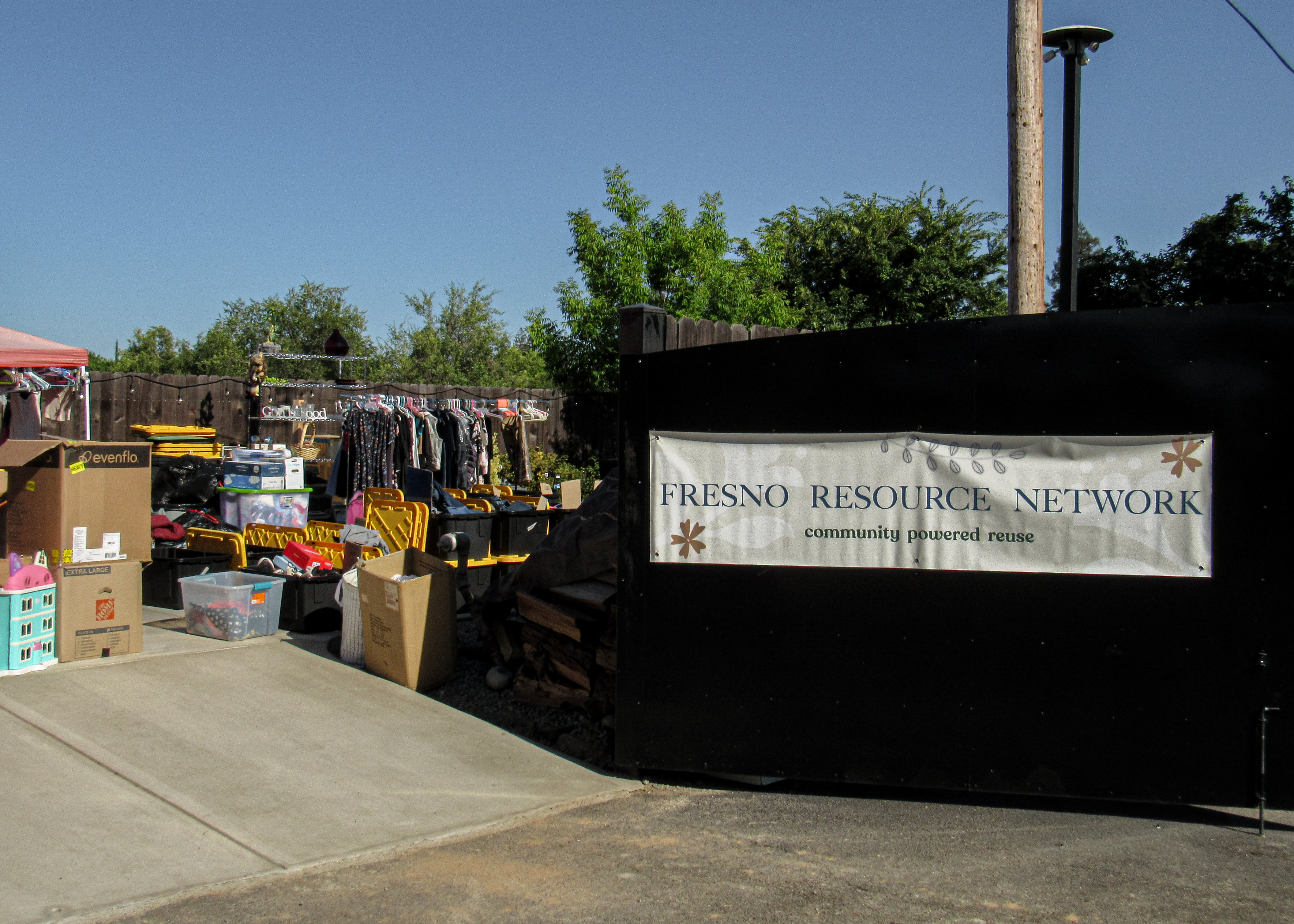
On a sweltering afternoon in a quiet Fresno neighborhood, Amber Rodgers stands in what used to be her backyard, now overflowing with donated clothes, books, and household goods. Outside, strangers fill trash bags with items they need; no cash register, no price tags, no questions asked.
“Just take it,” Rodgers tells visitors. “Take it if you need it.”
What began as a small porch pickup experiment has quickly evolved into a growing grassroots effort known as the Fresno Resource Network (FRN), a community-powered system that redistributes goods for free. Since Jan. of this year, the project has outgrown Rodgers’ home and is pushing toward a larger goal: reshaping how people think about consumption, charity and mutual aid.
Rodgers didn’t set out to build a nonprofit empire. In fact, the idea emerged during a difficult personal period.
“It was this past fall,” she recalls. “I had some medical stuff going on and I was out of work, didn’t have anything to do. And it just clicked one day. I was like, how do I still help people, but not want to make money off of it?”
Her answer was deceptively simple:
“Fuck it, we’re going to start a nonprofit.”
Unlike traditional thrift stores or charities, the organization operates without prices, income verification or limits on what people can take.
“I get asked all the time, like, do they need to bring an EBT card? Do they need to prove they’re homeless?” Rodgers says. “Absolutely not. We don’t need to see any of that.”
The absence of restrictions is intentional. Rodgers believes that removing barriers preserves dignity and trust within the community.
“Let’s have faith in our fellow man that they’re gonna do the right thing,” she says. “And lo and behold, we’re six, almost seven months in; not a single issue. In fact, people don’t take enough.”
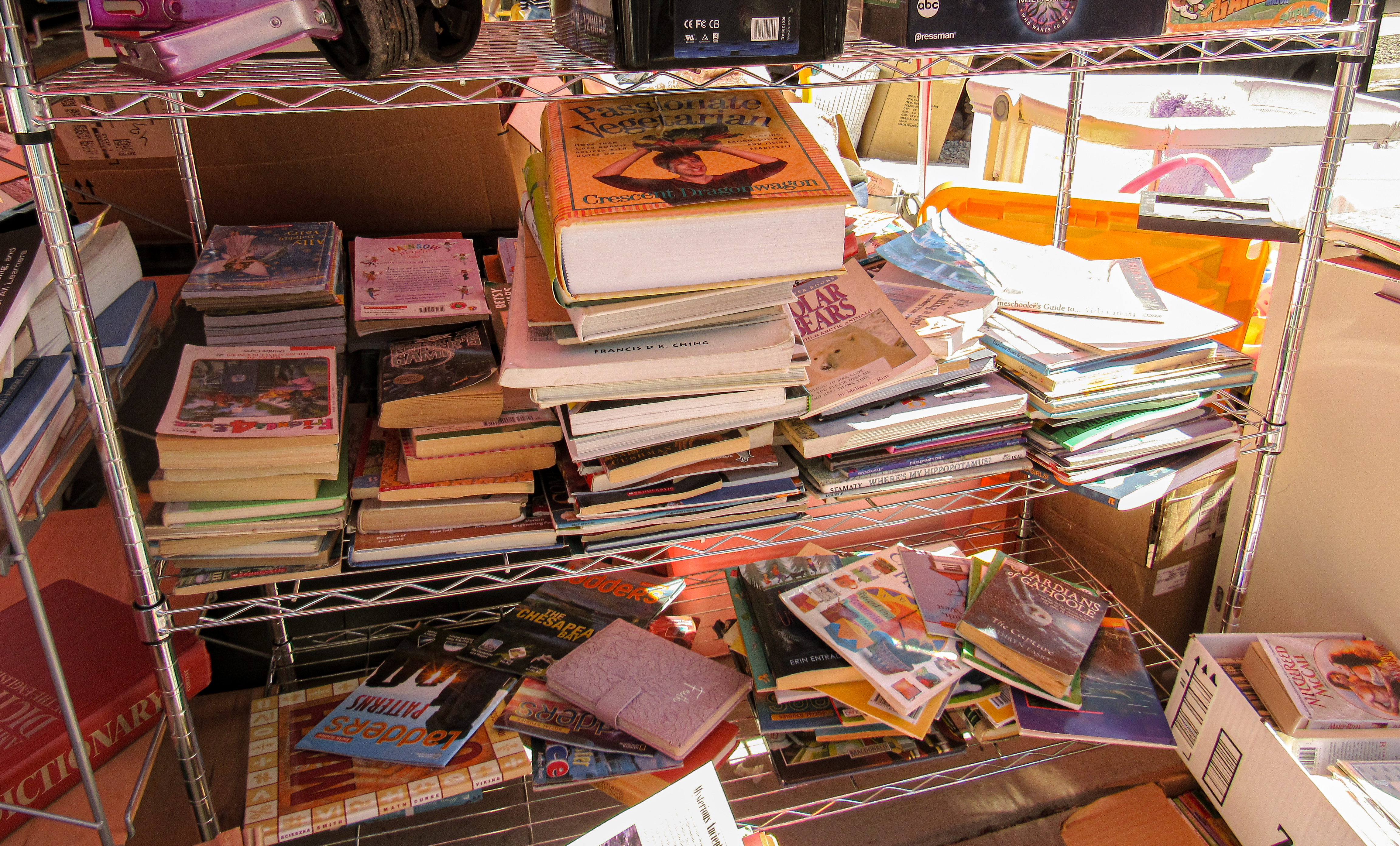
FRN is clearly making a positive impact on the local Fresno community. One “shopper,” Fresno State student Rosemary Luna, acquired a large salt rock lamp (valued at $50+ new) from the backyard. “It was really cool. Getting a lamp for free is a unique experience. If I had seen it at the store for more than $40 I wouldn’t have bought it for myself.” She applauds Rodgers’s actions against predatory capitalist motives.
Rodgers’ vision traces back more than a decade, when she was pregnant and living in the Bay Area. She remembers visiting thrift stores where items were sold at extremely low cost and even bulk deals.
“I remember everything was like 20 cents, and I thought, I’d love to do that in Fresno,” she says.
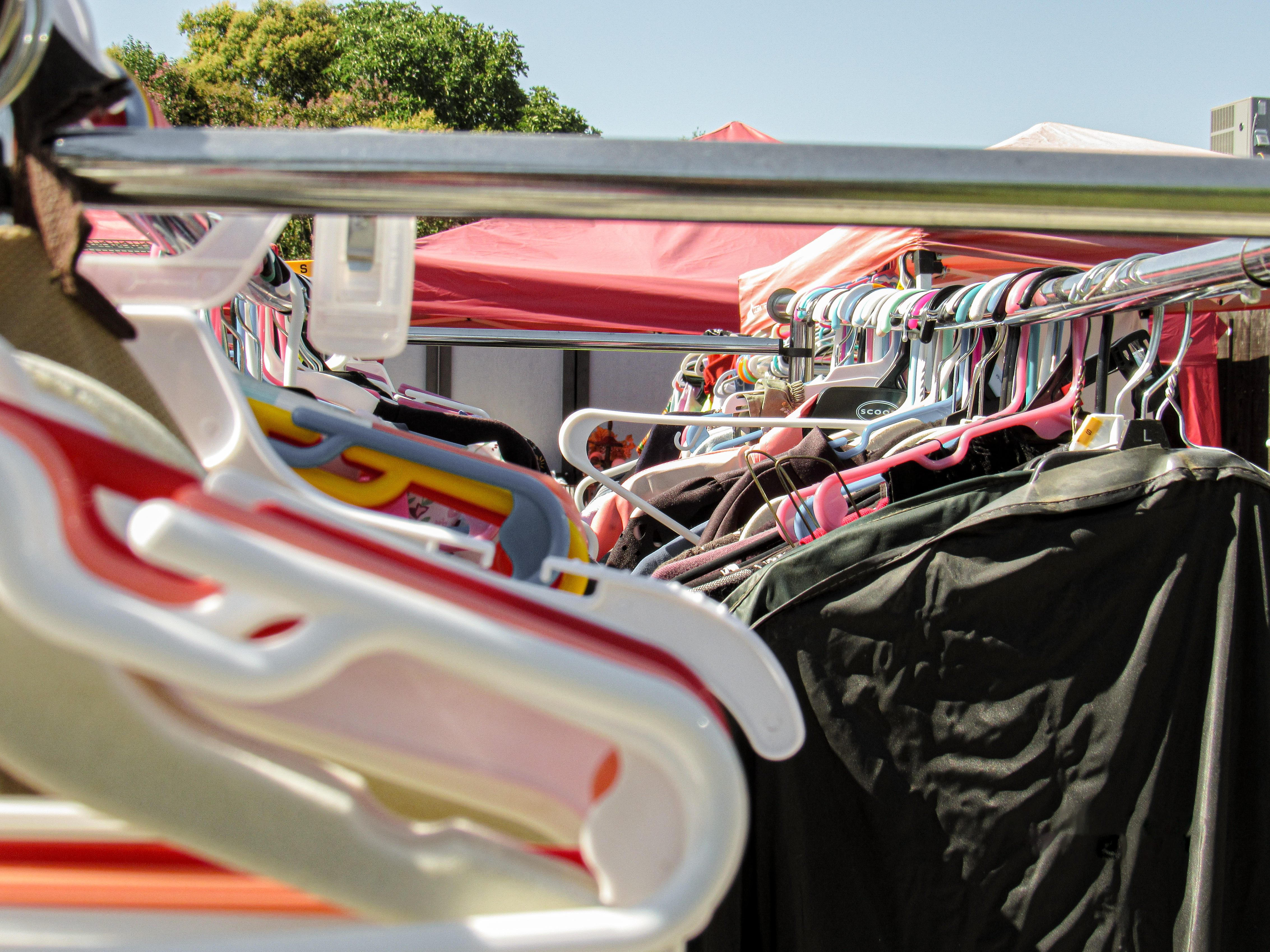
But life intervened. The idea stalled for years while Rodgers focused on raising her children and navigating personal challenges. She experimented with smaller efforts like participating in a local “random acts of kindness” Facebook group, advocating in schools, and organizing community support initiatives.
Then came the turning point.
Within months of launching FRN, what started in her living room spilled into her yard. Concrete was poured to create more space. Donations surged.
“We’ve already outgrown this,” she says, gesturing around. “We were out of my living room, and now we clearly need a storefront.”
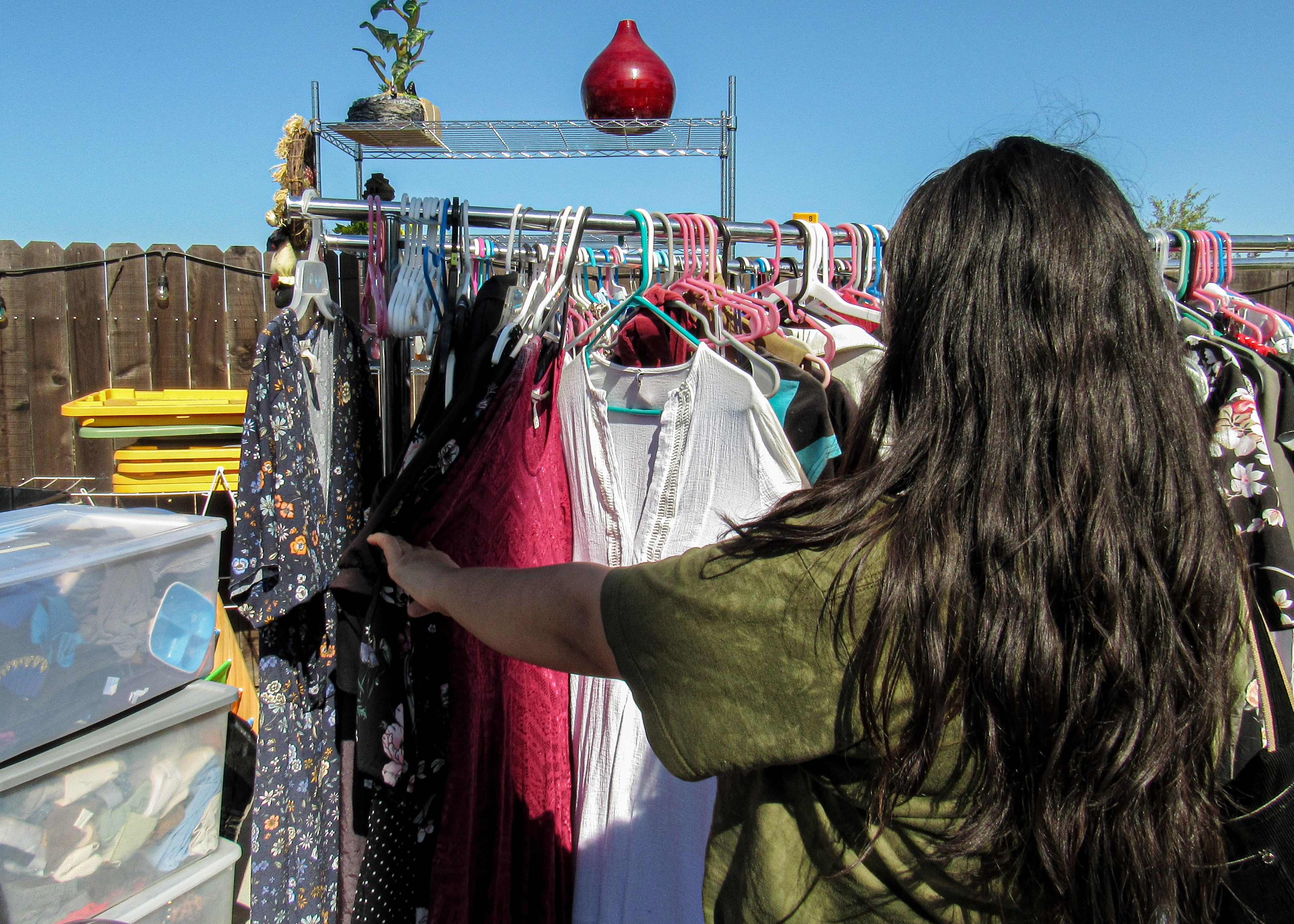
The rapid growth has confirmed what Rodgers suspected: there is both an abundance of unused goods and a deep need for accessible resources.
At its core, FRN is not just about redistribution, it is about resistance.
“My purpose is I see each and every one of these things as a big fuck you to corporate America,” Rodgers says. “It’s one less thing that we have to buy to be comfortable.”
She speaks candidly about the economic pressures facing working families, including her own.
“We are not the majority and even we struggle sometimes,” she says. “So imagine… it’s just bullshit the way that people are being used to suck their life so that other people can be rich.”
By offering goods without cost, FRN creates small but meaningful financial relief for families.
“That vacuum, maybe that’s 50 bucks,” she says. “That’s $50 someone gets to keep. Maybe now their kid gets a birthday present. I don’t care what they do with it. It’s not my business.”
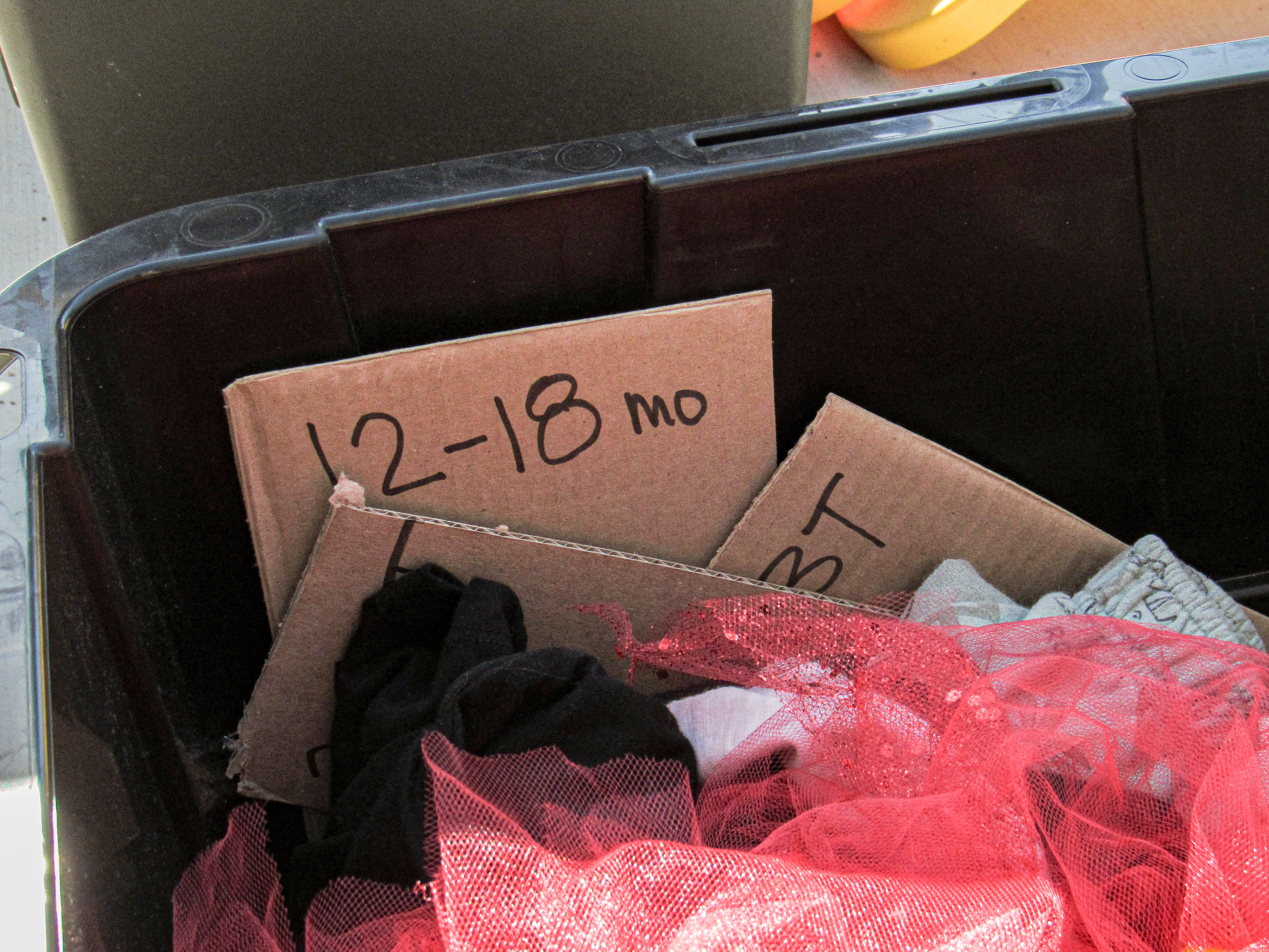
Even the possibility of reselling donated items doesn’t concern her.
“What do I care?” she says. “If they can resell it and make a couple bucks to feed their family, not my business.”
FRN’s ambitions extend beyond a free “store.” Rodgers envisions a broader system connecting resources across Fresno County. Frustrated by the lack of centralized information, she began compiling a database of local nonprofits and their needs. “I pulled all the IRS records in Fresno County of nonprofits,” she says. “And I’m reaching out to them to say ‘what’s on your wish list?’” The database allows users to search for organizations accepting specific donations, from dog food to books. “If I get a bunch of shoes, I want to know who needs them,” Rodgers explains. “Or backpacks—who deals with kids and can use them?” This networked approach is what inspired the name “Resource Network.” “All of these places are working independently,” she says. “I want to be able to route things to where they’re needed.”
The goal is to create a system where surplus is minimized and community needs are met more efficiently without waste or profit.
Despite its success, FRN faces logistical challenges. The operation currently runs out of a residential area, raising concerns about traffic and neighborhood disruption.
“I don’t want to burden them with extra traffic,” Rodgers says of her neighbors. “But everyone’s been very respectful.”
Another challenge is visibility. While word of mouth and platforms like Nextdoor have helped attract visitors, Rodgers is cautious about growing too quickly.
“I could post signs and people would come,” she says. “But then we’d have too many people. So it’s finding that balance.”
Social media, particularly Instagram, plays a different role: “I use Instagram to try and change the mindset,” she says. “Like, look at the good stuff we’re getting.” The account, @fresnoresourcenetwork, has amassed over 600 followers in the six months since its conception.
Rodgers’s vision for the future is both practical and ambitious. Within a year, she hopes to secure a warehouse space with consistent hours and a structured intake process. “To have a space with actual store hours, with volunteers,” she says. “That’s the goal.” More broadly, she wants FRN to become a first stop for anyone in need, before turning to major retailers.
“I want people to be like, ‘I need a prom dress, I need something for a wedding, I’m having a baby,’” she says. “Instead of going to Amazon, I want them to be like, let’s stop at FRN first.”
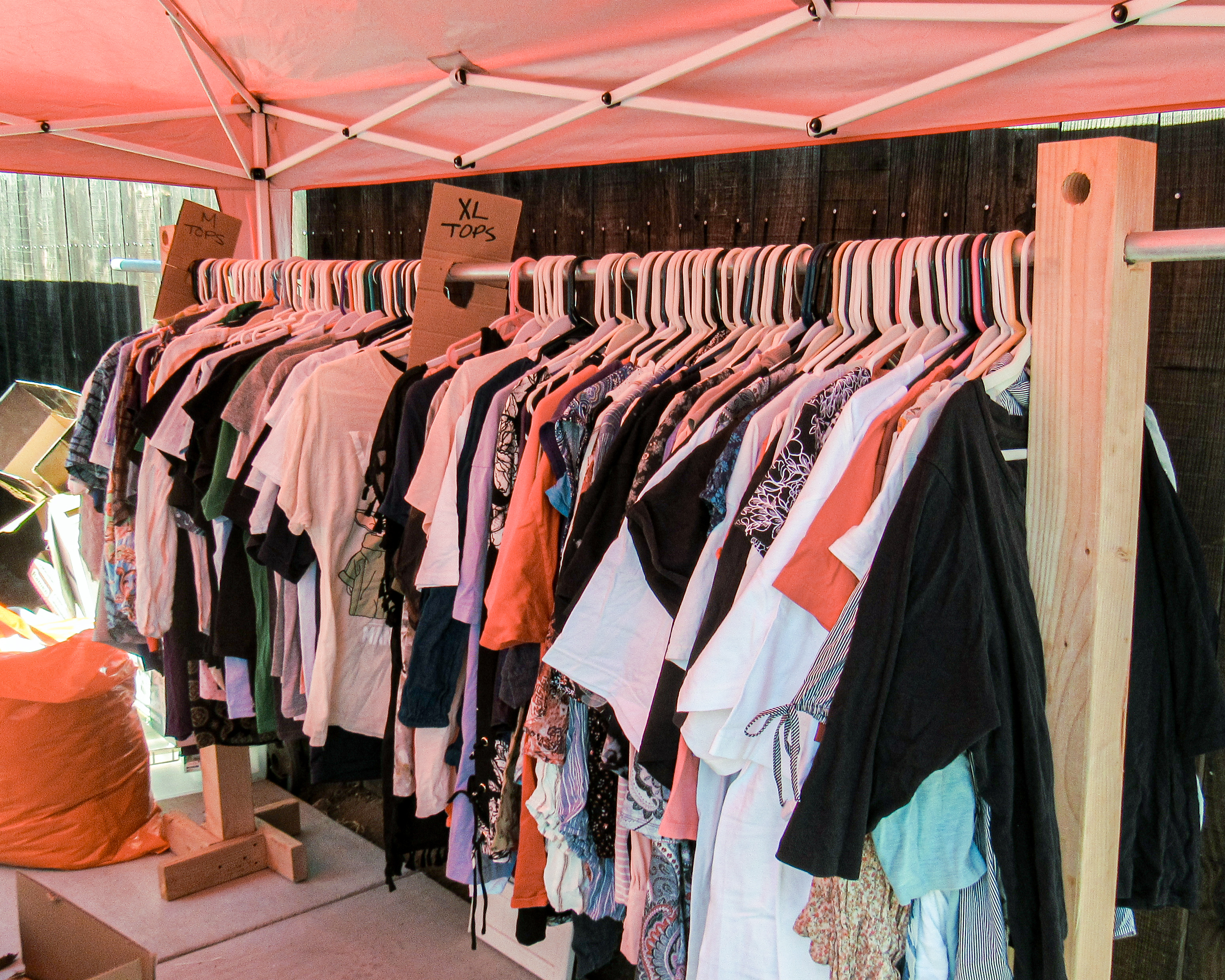
It is a vision rooted in community trust and collective responsibility.
“Community helping community without stipulations,” she says. “And showing we don’t need new stuff all the time.”
The path forward is uncertain. But for now, it’s hopeful.
“We’re winging it,” she says with a laugh.
“But it’s working.”
Writing, videography, photography, editing by
Aden Gutierrez
Student Journalist, UC Berkeley.
 adengutierrez.com